Technology
INS Full Form Explained: What Does INS Really Mean?

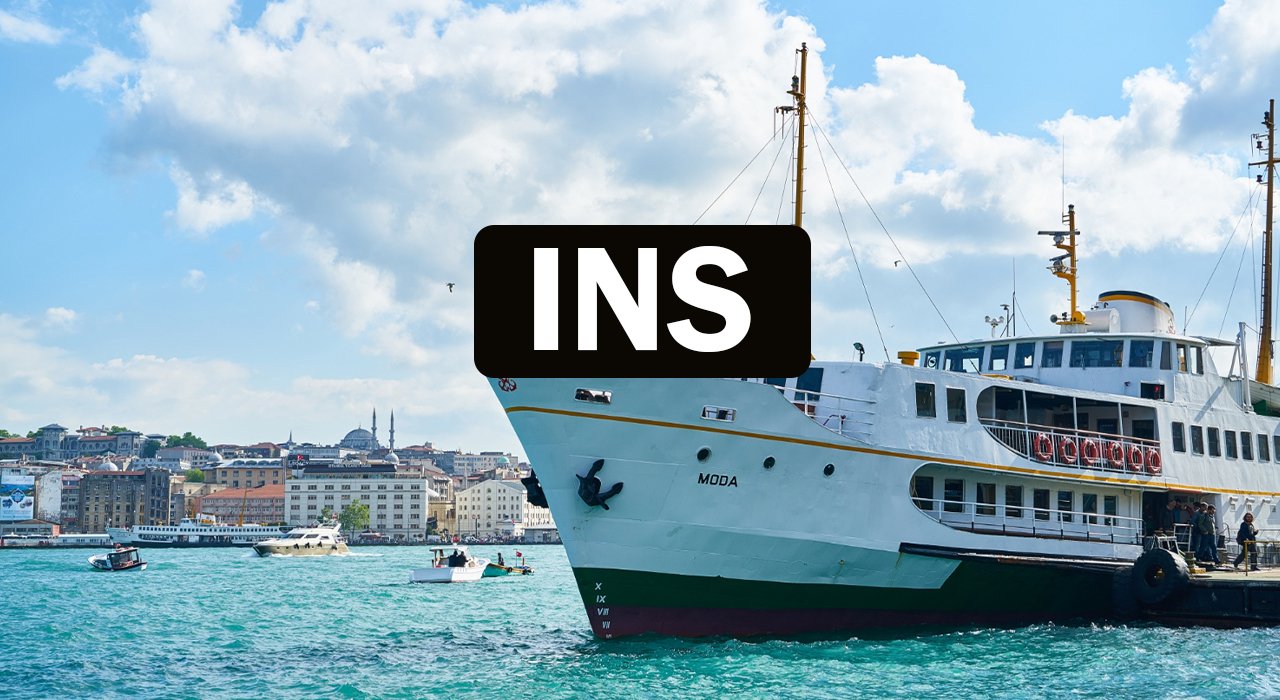
INS is a short term that carries several meanings depending on where you see it. Some people search for INS because they saw it before a ship’s name in the news. Others come across it in insurance papers, aviation manuals, or old government records. This article explains every common meaning of INS in plain language, so you never have to guess again.
INS in the Indian Navy
The most searched meaning of INS is Indian Naval Ship. The Indian Navy places this prefix before the name of almost every commissioned ship and submarine, such as INS Vikrant or INS Kolkata. The tag shows that the vessel belongs to the Indian Navy and operates under the Indian Armed Forces.
The Indian Navy’s roots go back to 1612, when the East India Company formed a small marine unit to protect British trade ships. After India became a republic in 1950, the force took its current name and structure. Today the Navy operates a large fleet, including aircraft carriers, destroyers, frigates, and submarines, and each one carries the INS prefix as part of its official identity.
INS in Insurance
In everyday business writing, INS often stands simply for insurance. Companies and agents use this short form in emails, contracts, and internal documents to save space and speed up communication. You may see it in phrases like “auto INS policy” or “INS claim form.”
This shortened form does not represent one single company or product. It works as a general abbreviation used across the insurance industry, from health coverage to property and auto policies. Reading the surrounding text usually tells you exactly which type of insurance the writer means.
INS as Inertial Navigation System
In aviation, shipping, and defense technology, INS stands for Inertial Navigation System. This system helps aircraft, ships, and missiles figure out their position and speed without relying on outside signals like GPS. It works through a set of sensors, including gyroscopes and accelerometers, that track motion and direction continuously.
Pilots and engineers value an Inertial Navigation System because it keeps working even in remote areas or when satellite signals are blocked or jammed. Many modern aircraft still use it as a backup navigation method alongside GPS, which makes it a critical safety feature rather than an outdated tool.
INS in United States Immigration History
Before 2003, INS stood for the Immigration and Naturalization Service, a federal agency in the United States. This agency managed visas, green cards, citizenship applications, and border enforcement for decades. It played a central role in shaping how people entered and settled in the country.
After the September 11 attacks, the government restructured its security agencies. The INS was dissolved, and its duties were divided among three new bodies: U.S. Citizenship and Immigration Services, U.S. Immigration and Customs Enforcement, and U.S. Customs and Border Protection. Many older documents and news articles still reference the INS, so understanding its history helps when researching immigration records from that era.
INS as International News Service
Long before modern digital news, INS referred to the International News Service, a wire agency founded by William Randolph Hearst in 1909. It gathered and distributed news stories to newspapers across the country, competing directly with other major wire services of that time.
In 1958, International News Service merged with United Press to create United Press International, a name still recognized in journalism today. Historians and researchers studying early twentieth century media often encounter this version of INS while reviewing old newspaper archives.
Other Common Uses of INS
Outside these major fields, INS shows up in a few smaller but useful contexts. In casual writing, “ins” refers to the advantages or entry points of a situation, as in the phrase “the ins and outs of a business.” In measurements, “ins” is a shorthand for inches, often seen on product labels and technical drawings.
Because INS can mean so many different things, context always matters most. A ship name, an insurance folder, a cockpit manual, or a history book will each point you toward the correct meaning within seconds.
Conclusion
INS is not tied to just one meaning. It can point to an Indian Navy warship, an insurance term, a navigation system, a former U.S. government agency, or a historic news service. Knowing the context helps you pick the right definition instantly, whether you are reading military news, insurance paperwork, or aviation guides.
Frequently Asked Questions
What is the full form of INS?
INS can stand for Indian Naval Ship, insurance, Inertial Navigation System, Immigration and Naturalization Service, or International News Service, depending on the context.
What does INS mean in the Indian Navy?
INS stands for Indian Naval Ship and appears before the names of ships and submarines operated by the Indian Navy.
Is the INS still an active U.S. government agency?
No, the Immigration and Naturalization Service was dissolved in 2003. Its functions now belong to USCIS, ICE, and CBP.
How does an Inertial Navigation System work?
It uses gyroscopes and accelerometers to track motion and calculate position without needing GPS or outside signals.
Why is INS used in insurance documents?
INS is simply a common shorthand for the word insurance, used to save space in forms, emails, and contracts.
Hungry for more? Check out the latest updates at Cyber Que


INS Full Form Explained: What Does INS Really Mean?

What Does “Faccccccccccccc” Mean? The Viral Internet Word Explained

What Is FedEx Trip Buddy? A Simple Guide for Linehaul Drivers

What Is a Fonendi? Simple Guide to the Stethoscope Doctors Use

What Is Acamento? The Simple Meaning Behind This New Word

What Is Nionenad? A Simple Guide to This New Internet Word

Best Tarta de Espinaca Near Me: A Simple Guide for Spinach Pie Lovers

Koi Fish: What They Are and Why People Love Them

Ketchum, Idaho: A Small Mountain Town With Big Adventures

Pinoroduct Com Review: Is This Online Shop Safe to Use in 2026?

Cadibara vs Capybara: What’s the Real Difference?

What Does “Fkstrcghtc” Mean? The Strange Word Everyone Is Searching
Best Tarta de Espinaca Near Me: A Simple Guide for Spinach Pie Lovers
Koi Fish: What They Are and Why People Love Them
Ketchum, Idaho: A Small Mountain Town With Big Adventures
Pinoroduct Com Review: Is This Online Shop Safe to Use in 2026?
Cadibara vs Capybara: What’s the Real Difference?
What Does “Fkstrcghtc” Mean? The Strange Word Everyone Is Searching
-
 Food4 months ago
Best Tarta de Espinaca Near Me: A Simple Guide for Spinach Pie Lovers
-
 Food4 months ago
Koi Fish: What They Are and Why People Love Them
-
 Blog4 months ago
Ketchum, Idaho: A Small Mountain Town With Big Adventures
-
 Blog4 months ago
Pinoroduct Com Review: Is This Online Shop Safe to Use in 2026?
-
 Education4 months ago
Cadibara vs Capybara: What’s the Real Difference?
-
 Blog4 months ago
What Does “Fkstrcghtc” Mean? The Strange Word Everyone Is Searching
-

 Health4 months ago
Authorised Medical Attendant: Meaning, Role, and Why It Matters for You
-

 Technology3 months ago
Droven IO Cybersecurity Updates: Easy Guide to Staying Safe Online in 2026